

Commercial Epoxy & Resin Flooring
High-Performance Solutions Installed by UK Experts
Commercial epoxy and resin flooring systems represent the pinnacle of durability, hygiene, and specialised performance for demanding UK business environments in 2025. These advanced flooring solutions, encompassing epoxy, polyurethane (PU), and polymethyl methacrylate (PMMA) resins, create seamless, impervious surfaces capable of withstanding extreme conditions, from heavy industrial machinery and chemical spills to rigorous cleaning regimes. Unlike conventional floor coverings, resinous flooring becomes integral to the building's structure, offering unparalleled longevity and tailored properties. However, such systems' success is critically dependent on meticulous substrate preparation and expert application by specialist installers. This ensures the floor not only meets but exceeds the operational demands of your specific industry.
This comprehensive guide explores the multifaceted benefits of choosing commercial epoxy and resin flooring, details the principal system types available, outlines our rigorous installation methodology, and highlights the diverse sectors that rely on these robust and versatile flooring solutions. Understanding these elements is key to investing in a floor that truly performs under pressure.
Why Choose Commercial Epoxy & Resin Flooring? The Unrivalled Advantages
Opting for a commercial epoxy or resin flooring system is a decision that brings a wealth of operational and long-term benefits, particularly for businesses where standard flooring simply won't suffice. These systems are engineered for performance:
- Exceptional Durability and Impact Resistance: Designed to endure relentless forklift traffic, heavy machinery, dropped tools, and constant abrasion, these floors are incredibly tough. Heavy-duty resin screeds, for instance, offer phenomenal compressive strength.
- Seamless and Hygienic Surface: Resin floors are typically applied as a liquid, curing to form a continuous, non-porous surface with no joints or grout lines where bacteria, mould, or dirt can accumulate. This makes them exceptionally easy to clean and sanitise, crucial for hygiene-sensitive industries.
- Superior Chemical Resistance: Different resin formulations offer varying degrees of resistance to a wide spectrum of chemicals, including acids, alkalis, solvents, oils, and cleaning agents. This is vital for manufacturing, laboratories, and food processing environments.
- High Abrasion Resistance: The inherent toughness of resin systems means they resist wear from scraping, scuffing, and continuous foot or vehicular traffic, maintaining their integrity and appearance for longer.
- Water and Moisture Impermeability: Being non-porous, resin floors are entirely waterproof, preventing water ingress into the substrate and protecting against damage. This also makes them ideal for wet processing areas.
- Tailored Slip Resistance: The surface profile can be customised by incorporating aggregates (such as quartz, aluminium oxide, or coloured flakes) into the resin system during installation, providing various levels of slip resistance to meet specific safety requirements (e.g., HSE guidelines).
- Aesthetic Versatility and Finishes: Far from being purely functional, modern resin floors offer a wide range of decorative options. They are available in numerous colours (RAL/BS standards), can incorporate decorative flakes or quartz aggregates for unique visual effects, and can be finished in high gloss, silk, or matt sheens.
- Long Lifespan and Excellent Life-Cycle Cost: While the initial investment might be higher than some conventional flooring, the extreme durability and low maintenance needs of resin floors result in a significantly lower life-cycle cost, offering excellent long-term value.
- Thermal Shock Resistance: Certain resin systems, particularly polyurethane (PU) cementitious screeds, are designed to withstand extreme temperature fluctuations and thermal shock, such as those encountered during steam cleaning or in environments with ovens or freezers.
- Rapid Curing Options for Minimal Downtime: PMMA resin systems and some polyaspartics offer incredibly fast curing times, allowing floors to be returned to full service within a matter of hours, drastically minimising operational disruption.
Types of Commercial Epoxy & Resin Flooring Systems We Expertly Install
The term "resin flooring" covers several distinct chemistries, each with unique properties that suit different commercial and industrial applications. Our expertise encompasses the leading resin technologies:
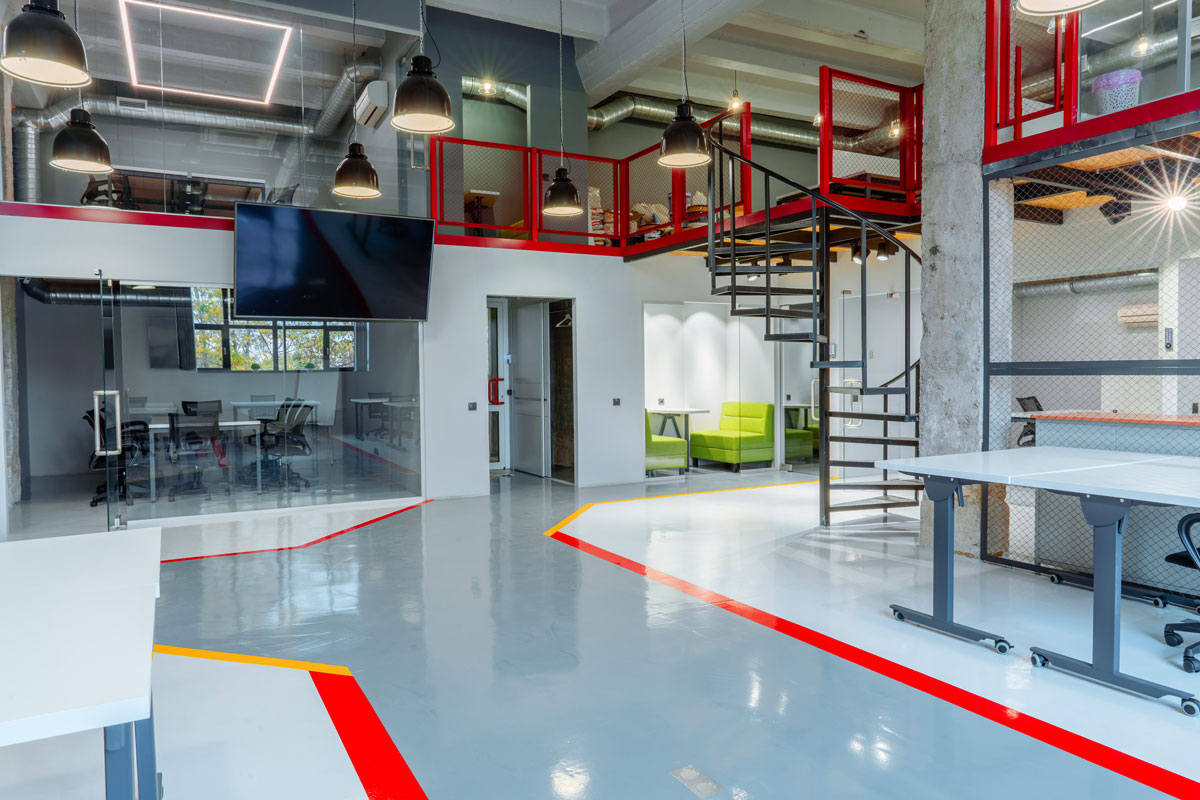
Epoxy Resin Flooring
Epoxy resins are two-component systems (a resin and a hardener) that chemically react to form a rigid, durable plastic material. They are a versatile and widely used option.
- Common Systems: Self-smoothing epoxy (for a level, high-gloss finish), high-build epoxy coatings (providing good thickness and protection), epoxy resin screeds (heavy-duty, trowel-applied), anti-static/ESD (Electrostatic Dissipative) epoxy flooring (for sensitive electronic environments), and decorative epoxy systems incorporating coloured flakes or quartz aggregates.
- Pros: Excellent adhesion to concrete, good all-round mechanical strength, good chemical resistance to various substances, relatively cost-effective, wide aesthetic possibilities, and high gloss finishes achievable.
- Cons: Can be less flexible than polyurethane, potentially longer curing times compared to PMMA, standard aromatic epoxies can be prone to yellowing or chalking under UV exposure (aliphatic epoxies offer better UV stability).
- Best Suited For: Warehouses, manufacturing plants, automotive workshops and garages, showrooms, laboratories, food processing areas (specific formulations), general industrial flooring, and areas requiring good chemical and wear resistance.
Polyurethane (PU) Resin Flooring
Polyurethane resin systems are known for their enhanced flexibility, superior abrasion resistance, and, in some formulations, excellent thermal shock resistance.
- Common Systems: PU self-smoothing floors, heavy-duty PU resin screeds (often cementitious, offering exceptional durability and resistance to thermal shock and moisture vapour), PU coatings (thinner, protective layers), and flexible PU systems for crack-bridging.
- Pros: Exceptional abrasion and impact resistance, greater flexibility than epoxy (can accommodate minor substrate movement), excellent chemical resistance (often superior to epoxy for certain chemicals), outstanding thermal shock resistance (especially PU cementitious screeds, making them steam-cleanable), and good UV stability with aliphatic PU topcoats.
- Cons: Can be more expensive than some epoxy systems, some formulations can be sensitive to moisture in the substrate during application.
- Best Suited For: Food and beverage industry (critical for HACCP compliance, steam cleaning), breweries, dairies, commercial kitchens, cold storage facilities, freezers, heavy manufacturing, pharmaceutical plants, chemical processing areas, and car parks. A leading choice for heavy-duty industrial flooring.

Polymethyl Methacrylate (PMMA) Resin Flooring
PMMA resins are renowned for their incredibly rapid curing times, even at very low temperatures, making them ideal for projects where minimal downtime is absolutely critical.
- Common Systems: PMMA self-smoothing systems, PMMA screeds (often incorporating decorative flakes or coloured quartz), and PMMA coatings. Can be layered to achieve desired properties.
- Pros: Extremely fast cure – floors can often be returned to full service within 1-2 hours of final coat application; can be installed in temperatures as low as -30°C (with specific formulations); excellent chemical resistance; highly durable and wear-resistant; can be highly decorative.
- Cons: Strong odour during installation (requires excellent ventilation and often area segregation); typically higher material cost than epoxy or PU; application requires highly specialised and experienced operatives due to the rapid reaction time.
- Best Suited For: Projects demanding extremely fast turnaround (e.g., retail refurbishments overnight, busy food production lines, public access areas), cold storage and freezer applications, external applications (when formulated for UV stability), and emergency repairs.
Our Specialist Commercial Epoxy & Resin Flooring Installation Process: A Foundation for Performance
The performance and longevity of any commercial resin floor are overwhelmingly dependent on the quality of the installation, with meticulous surface preparation being the absolute cornerstone. Our process, adhering to best practices like those outlined by FeRFA (The Resin Flooring Association), ensures a flawless and durable finish.
- Detailed Consultation and Comprehensive Site Survey: We begin by thoroughly understanding your operational requirements: the types of traffic (foot, wheeled, heavy machinery), chemical exposure, temperature fluctuations, hygiene standards (e.g., HACCP, GMP), slip resistance needs, and aesthetic desires. A detailed site survey involves assessing the existing substrate, its condition, and potential environmental factors.
- Substrate Testing, Analysis, and System Specification: Critical tests are performed, including moisture content analysis of the concrete substrate (using methods like the Protimeter survey or RH% sleeve tests), adhesion pull-off tests to determine substrate strength, and checks for contamination (oils, grease, etc.). Based on these findings and your requirements, we specify the precise resin system, required thickness, surface profile, and finish.
- Intensive Surface Preparation – The Non-Negotiable Key to Longevity: This is the most critical stage. The substrate must be mechanically prepared to create a clean, sound, and profiled surface for optimal adhesion of the resin system. Common methods include:
- Diamond Grinding: For smoothing uneven surfaces and removing old coatings or laitance.
- Shot Blasting: Propels steel shot at high velocity to create an ideal surface profile and remove contaminants.
- Planing/Scabbling: For heavily contaminated or damaged concrete, or when a significant reduction in level is needed.
- Application of a Compatible Primer: The correctly selected primer is applied to seal the prepared substrate, prevent outgassing (pinholes in the resin), enhance adhesion, and potentially act as a moisture vapour suppressant if needed.
- Precise Mixing and Expert Application of the Resin System: Resin components are mixed precisely according to manufacturer’s instructions using specialist mixing equipment. The chosen system is then applied by our highly skilled operatives using appropriate techniques:
- Coatings: Applied by brush, roller, or squeegee and back-rolled.
- Self-Smoothing Systems: Poured and spread to the desired thickness using serrated squeegees, then spike-rollered to release trapped air and aid levelling.
- Resin Screeds: Trowel-applied to achieve greater thicknesses and often compacted for maximum density and strength.
- Application of Sealer or Top Coat (If Specified): A final top coat may be applied to provide enhanced UV stability, specific chemical resistance, improved cleanability, or a desired gloss/matt finish. This also seals in any decorative elements.
- Controlled Curing and Stringent Quality Control: The floor is allowed to cure fully as per the manufacturer's data sheet, considering ambient temperature and humidity. Minimum trafficking times are strictly observed. A final inspection ensures the floor meets the specified thickness, finish, and overall quality standards.
Why Entrust Your Commercial Epoxy & Resin Flooring to Our Experts?
Choosing the right contractor for your commercial resin flooring project is critical. Our specialist service is built on expertise, quality, and a commitment to delivering floors that perform.
- Adherence to Industry Best Practices (e.g., FeRFA Standards): We follow the guidelines and codes of practice set out by leading industry bodies like FeRFA (The Resin Flooring Association), ensuring quality and professionalism.
- Highly Trained and Experienced Application Teams: Our operatives are fully trained and possess extensive experience in applying a wide range of commercial epoxy and resin flooring systems, including specialist techniques.
- Uncompromising Approach to Surface Preparation: We understand that surface preparation is paramount and invest the necessary time and technology to achieve the perfect substrate for lasting adhesion and performance.
- Use of Premium, Industrial-Grade Resin Systems: We partner with leading UK and international resin manufacturers to source high-quality, durable, and certified materials tailored to your specific needs.
- In-Depth Knowledge of Specific Industry Requirements: We have proven experience in delivering resin flooring solutions that meet the stringent demands of various sectors, including food safety (HACCP), anti-static/ESD control, chemical containment, and cleanroom standards.
- Strict Adherence to Health & Safety Regulations: All work is carried out in compliance with UK Health & Safety legislation, including COSHH assessments, provision of adequate ventilation, and appropriate PPE for our teams.
- Detailed Project Management and Minimal Disruption Planning: We offer comprehensive project management, working closely with you to schedule works efficiently and minimise disruption to your ongoing business operations, including out-of-hours and phased installations.
Commercial Epoxy & Resin Flooring: Tailored Solutions for Demanding UK Sectors
The unique properties of epoxy and resin flooring make them the ideal choice for a diverse range of demanding commercial and industrial environments across the UK:
- Industrial and Manufacturing: Factories, engineering workshops, chemical plants, and assembly lines benefit from extreme durability, chemical resistance, and impact strength.
- Warehousing and Logistics: Seamless, hard-wearing surfaces withstand heavy forklift traffic, abrasion, and provide easy-to-clean, dust-free environments.
- Food and Beverage Processing: Hygienic, seamless, and often steam-cleanable PU screeds meet stringent food safety standards (HACCP compliance) and resist organic acids, fats, and aggressive cleaning regimes.
- Pharmaceutical, Healthcare, and Laboratories: Provide sterile, easy-to-clean, and chemically resistant surfaces for cleanrooms, laboratories, hospitals, and research facilities. Anti-microbial options are available.
- Automotive Sector: Showrooms achieve stunning, high-gloss decorative finishes, while workshops and garages benefit from oil, grease, and chemical resistance, plus durability.
- Retail and Commercial Spaces: These are increasingly used for their decorative potential, offering unique aesthetics (e.g., polished concrete effects, vibrant colours, flake systems) combined with heavy-duty performance for high-traffic areas.
- Aerospace and Electronics Manufacturing: Specialist anti-static (ESD) resin flooring protects sensitive electronic components from electrostatic discharge.
- Leisure and Hospitality: Durable and hygienic solutions for commercial kitchens, changing rooms, plant rooms, and even public areas where a unique, hard-wearing decorative finish is desired.
Maintaining Your High-Performance Commercial Epoxy & Resin Floor
While exceptionally durable, proper maintenance will ensure your commercial epoxy or resin floor retains its performance characteristics and aesthetic appeal for its full intended lifespan.
- Implement a Regular Cleaning Regime: Daily sweeping or vacuuming (with a soft brush) to remove loose dirt and grit. Regular mopping or cleaning with a scrubber-dryer machine using appropriate pads/brushes is recommended for larger areas.
- Use Suitable Cleaning Agents: Generally, pH-neutral cleaners are recommended. Avoid harsh, abrasive, or highly acidic/alkaline cleaners unless specifically approved for your particular resin system and type of soiling. We will provide specific cleaning guidance.
- Address Spills Promptly: Although highly resistant, cleaning up chemical or oil spills quickly is good practice to prevent any potential long-term effects or safety hazards.
- Conduct Periodic Inspections: Regularly inspect the floor for any signs of damage, such as deep gouges or cracks (though rare with proper installation). Early detection allows for simple repairs.
- Consider Protective Matting at Entrances: Good quality entrance matting can help reduce the amount of abrasive grit and moisture tracked onto the floor.
- Re-coating or Repair if Necessary: One of the benefits of some resin systems is that localised damage can often be repaired seamlessly. After many years of heavy use, a resin floor can also be re-coated to refresh its appearance and extend its life further.
Frequently Asked Questions About Commercial Epoxy & Resin Flooring
How long does a professionally installed commercial epoxy or resin floor typically last?
A commercial epoxy or resin floor can last for many years with correct specification for its intended use, expert installation (especially surface preparation), and proper maintenance. Medium-duty systems might last 7-10 years, while heavy-duty resin screeds can perform for 15-25 years or even longer in demanding industrial environments.
What are the main differences between epoxy and polyurethane (PU) resin flooring systems?
Epoxy flooring offers excellent hardness, adhesion, and good chemical resistance at a competitive price. Polyurethane flooring typically provides greater flexibility, superior abrasion resistance, better impact absorption, and outstanding thermal shock resistance and moisture tolerance, particularly with PU cementitious screeds. Aliphatic PUs also offer better UV stability than standard epoxies.
How critically important is surface preparation for resin flooring installations?
Surface preparation is arguably THE most critical factor for the success and longevity of any resin flooring system. An inadequately prepared substrate (e.g., contaminated, damp, weak, or poorly profiled) will almost certainly lead to premature floor failure, such as delamination, blistering, or cracking, regardless of the quality of the resin itself.
Can commercial epoxy and resin flooring be made slip-resistant?
Yes, absolutely. Slip resistance can be tailored to specific requirements by broadcasting various types and sizes of aggregates (e.g., quartz, aluminium oxide, polymer beads) into the wet resin or incorporating them into the resin mix itself, followed by sealing. This creates a textured surface that meets HSE guidelines for different environments.
How quickly can a commercial resin floor be installed and put back into full service?
This depends heavily on the chosen resin system and site conditions. Standard epoxy or PU systems might take 3-7 days for full installation and cure before accepting heavy traffic. However, PMMA resin systems are designed for rapid installation and can cure fully within 1-2 hours, allowing for return to service on the same day, ideal for projects requiring minimal downtime.
Is commercial epoxy and resin flooring a hygienic flooring solution?
Yes, it is exceptionally hygienic. The seamless, non-porous surface prevents the harbouring of bacteria, mould, and dirt. It is easy to clean and sanitise thoroughly, making it ideal for food and beverage processing, healthcare, pharmaceuticals, and other hygiene-critical industries. Coving can also be formed integrally with the floor for wall-to-floor hygiene.
Can damaged areas of a commercial resin floor be repaired?
Yes, in many cases, localised damage to a resin floor can be repaired. The damaged section can be cut out, the substrate re-prepared, and new resin applied to match the existing floor. The repair's success and seamlessness depend on the floor's age and the specific resin system used.
How resistant are commercial epoxy and resin floors to chemicals?
Commercial resin floors offer excellent resistance to a wide range of chemicals, but the specific level of resistance varies depending on the type of resin (epoxy, PU, PMMA, vinyl ester etc.) and its exact formulation. It's crucial to specify the chemicals the floor will be exposed to so the most appropriate system can be selected. For instance, certain PU screeds offer exceptional resistance to organic acids found in the food industry, while other systems might be better for solvents or inorganic acids.
